The Warmth of Other Suns

You are standing in a gas chamber, naked and hungry. Nothing is in sight, not even your own limbs. The darkness is frightening and slowly becoming familiar. There’s no sound, no movement of light, and the only reason you know you are in a gas chamber is because of the putrid smell of decayed human flesh in the air, encased by a pulsating gassy smell. The toxins beat at your dry lips. The cement floor on your bare feet provides the only bodily sensation available. Do you stay alert and coherent? Is dissociation an ally to be summoned? How are you going to survive. The door to the gas chamber creaks open with a warm gust of wind swallowing you whole. I am at the door, fully clothed staring at you. Staring. You reach for me but miss, and stumble to your knees onto the cold unforgiving cement. I extend my hand. Still sticky from the dinner most recently enjoyed, as the smell of basil twirls in your direction. The sound of footsteps echo in the background. I turn my head towards the sound and look back at you in terror. Your mouth opens to speak but no sound escapes. You do not escape. I close the door, trying to signal with my eyes that I promise to return as the echoing footsteps draw closer. I promise to return.

images.jpeg

N.K. Jemison is still on my mind, so writing in second person is still on my mind. The other second person point of view in literature that resoundingly stands out is from Isabel Wilkerson in her New York Time’s Bestseller, “Caste: The Origins of Our Discontents”. In her epigraph, and only in her epigraph, she engaged in second person point of view writing, which expressed out the gate who her target audience is: white Americans. It is entirely undeniable who she wrote the book for. Language matters, and I get the approach in utilizing the word “caste” to soften the realities of using the word “racism”, when engaging with a white audience - I get the strategy even though I do not agree with it. Americans, white and white assimilated are going to eat this book up. [white assimilated denotes a person of color who actively assimilates towards whiteness, consciously and purposefully, to an extent of disavowing their own racial self hate]. Some of my radically minded friends and family members (black, white and POC) will never pick the book up, they are not the target audience. It does not matter that Oprah put it on her bookclub list. It was not written for them. Hence my decision to highlight, not the book that is grabbing the attention of individuals right now but Isabel Wilkerson’s ACTUAL WORK OF ART that she spent over 15 years putting research into, “The Warmth of Other Suns”. Purchase it.

I could’ve written in second person about being in the Dominican Republic in a field of parsley, and a whole generation of elderly Haitians might find it intolerable to read concerning the point of history in which Haitians were aggressed upon and murdered at a genocidal rate (google Parsley Massacre). I could reference the Rohingya genocide as well amongst over a handful of genocides in the last 2 decades. But instead I opted for a gas chamber. You cannot breathe in a gas chamber. What is going on in the world that we live in? What has been going on when aspects of difference drive one group to aggress upon another, and justify the behavior. Am I exaggerating by stating that there’s a genocide taking place in America right now, and has been for centuries. My Native American/Indigenous kin might have a lot to say concerning the topic, let a lone black men in America.

I experience most people in the gas chamber and at the doorway of the gas chamber. Needing help, wanting to help. I am less concerned about that dynamic. What is the gas chamber doing there in the first place? Who put the person in there? Why is one on the inside and one on the outside? Those footsteps shifted something. Who or what is the third in that dynamic? Can you see yourself in all 3 roles?

I am both the person in the gas chamber, the person opening the door to the gas chamber and the dark matter in the air bearing witness to the approaching footsteps towards the gas chamber.

Race is the topic right now. If you are part of a diversity group that is not centering race right now then speak out, as John Lewis so proudly exclaimed (may he Rest In Peace), “cause good trouble, necessary trouble”. If you are in a group concerning diversity, race, equity, inclusion and race is NOT being centered in your discussions then seek a consultant immediately. Not 10 months from now, or 10 years from now, but right now. Add variety to your lexicon of authors around race, do not solely settle into the opinion of those who you agree with. There are numerous perspectives concerning race! On that note, the “starter pack” for a person curious about race, but also holding some shame about not knowing “enough”, not doing “enough”, not wanting to say the “wrong” thing, feeling stuck:

-The New Jim Crow

-Colorizing Restorative Justice: Voicing Our Realities

-Stamped: Racism, Anti-racism and You

-Post Traumatic Slave Syndrome

-Medical Apartheid

-anything from Toni Morrison

-The Healing Wisdom of Africa

-Balm in Gilead

-As Brave as You

-The Farming of Bones

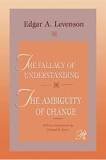
The Fallacy of Understanding, The Ambiguity of Change

Unknown.jpeg

In January of 2016 I noticed this book by Dr. Edgar Levenson resting comfortably on the bottom shelf of an end table. It was not my end table. The book next to it caught my eye first, “Pimp: The Story of My Life” by Iceberg Slim. The existence of both pieces of literature on the same end table was marvelous. Such a stark difference of purpose, entirely different target audience, but (originally) published within 3 years of each other. I had the thought “oh major cool points” pertaining to the owner of both books. 4 years later I have finished reading “The Fallacy of Understanding, The Ambiguity of Change”. I picked it up, put it down. Took some notes, referenced it pertaining to my private practice. Lost the book. Found it. Read through a chapter in a day. Forgot its existence. This played out over and over again until this past week, in which I had a moving visit with my nieces. We talked about Haitian deities, Peppa Pig and Kamala Harris while coloring & painting. My eldest niece took a break to nap and in entered my youngest niece’s imaginary friend, who decided that it was best for us to pivot towards playing Leggo’s for 20 minutes, mixed in with my crystals. We built a mini village of pyramids. Now I can attempt to state the general context of it all and it still would not fully grasp the interaction. In fact, despite my gift of gab the experience that I shared with her is ineffable in such a way that even attempting to explain it soils the true essence of the interaction. She essentially attempted to persuade me that we were having a grand experience jointly due to her older sister’s nap and the included company of her imaginary friend who preferred Leggo’s over coloring.

I’m her favorite aunt, or so she likes to gas me up with that beautiful compliment, and I enjoy being gassed up so the dynamic works. She dismantled our mini pyramid village by stepping on our creation, gave me a big kiss, a bear hug then directed her imaginary friend to take my Mexican agate stone away from me since I didn’t know how to share, as she exited the room to join her sister’s nap time. Right before turning the corner, she asked me “am I your favorite niece aunty”? I was stuck on the destruction of our beautiful pyramid village with bridges, roads and crystals. Why was I so emotionally invested in keeping our mini pyramid village standing when clearly, like clockwork, every time we played this game she dismantled it at the end? How did I fall for this every time?! I associated to a passage in the book, remembering it surprised me and in that surprise I decided to finally finish reading the book to completion:

“Fidelity requires that one ask, ‘how can I manage to function successfully or happily in this society?"‘ The new question may well become, ‘why should I function successfully or happily in this society?’ What is questioned is the organization, the greater social structure in which one is immersed.”

This text by Dr. Levenson is one of those reviving pieces of literature that I’d recommend to individuals with a deep curiosity towards how we come to consider ourselves understanding the experience of another. I’m talking about genuine curiosity that tends to open up bizarre questions that can incite frustration as easily as creating empathetic attunement. I’m a big fan of working psychoanalytically, which has cued raised eyebrows my way due to psychoanalysis’s long history of oppressive archaic ways of thinking and being, specifically as it pertains to sexual orientation, race and gender. I get it….. yet I have yet to be exposed to any mental health modality that is not originally developed from an oppressive lens. Think about that for a second, and I invite you to fact check what I’ve just asserted. Insert practicing through an anti-oppressive lens through a decolonized framework. I like being able to think about thinking. And I love being able to consider the various meanings behind the most simplistic details. My niece asking me if she’s my favorite didn’t happen in a vacuum. It’s a game we play, in which she is always the winner - as is her older sister. “Of course you are my favorite, and so are you!” is the answer they get while both together. One on one, the answer doesn’t change. They are both my favorite and the meaning of ‘favorite’ changes constantly.

“The Fallacy of Understanding, The Ambiguity of Change” had me ground myself in working slower and feeling comfortable at that pace whether it’s with an adult 4x’s/week or a child for a 60 minute session. I also truly enjoyed the clinical examples in the text that highlighted cultural difference and the various meanings that can come about through perspectivism. It comes at no shock that the person who exposed me to this book, by owning it, also exposed me to psychoanalysis.

“Two snaps and a twist”!

The African Unconscious

51E7Av2nj8L._SX331_BO1,204,203,200_.jpg

Thanks for this gem back in 2012 BiBi, and a grand thank you to my mother for all of the Gems that came before. The robust exposure to art in its various forms, I will forever be grateful for.

Happy Birthday to the 1st Leo in my life! xx

Dr. Bynum’s ahead of the curve in many ways, and this is an absolute read . When initially gifted to me I knew I’d need to glide through the pages again in the future. Just wrapped up the 1157 pages. It made me want to express my joy through dance - so I did, up to the initial 2:20 seconds lol

“There are years that ask questions and years that answer “

- Zora Neale Hurston

Stamped: Racism, Antiracism and You

Antiracism.jpg

I sat down recently with a few colleagues in Central Park, maneuvering between social distancing and being emotionally intimate with each other. It was quite normal minus aspects of not hugging each other upon greeting, and of course the masks – which were taken off to casually enjoy each other’s food & drink. This was a meeting of the minds.  A cluster of mental health professionals from different disciplines, with different degrees & credentials, various ages, various ethnicities, all in full-time private practice. Some palo santo was burned to clear out uninvited energy, and to usher in synergy as we each settled onto our blankets. We spoke directly about the Black Lives Matter movement, working virtually & COVID19 for 5 hours. And not solely in the ways in which friends and family may casually talk about the current sociopolitical and perhaps throw in a historical reference or two; we were debating as clinicians who have motivations towards the world being a better place. It’s comical that the simplicity of a statement such as “make the world a better place” can be subjectively given a different meaning based on the listening ear. My “better place” was verbalized as starkly different from my peers as I spoke of the balance in mourning the reality of current suffering balanced with allowing a person’s self determination to dictate what they do with their life. Gender equity, #blacktranslivesmatter, poverty, racial equity, women’s education, and climate change were among the popular array of topics posed concerning “a better world” from each of us, while I continued to highlight the mourning necessary for any real reconciliation. CBT, DBT, EMDR, Gestalt, psychoanalytic, trauma focused, indigenous conscious, affirmative, somatic, I mean really I could add at least another 5 identifiers concerning the wide spectrum of therapeutic modalities that each of my peers subscribe to as the optimal form of treatment. Black, White, Latinx, Chinese, straight, gay, married with kids, single, non-able bodied, male, female, trans. We rolled up our sleeves and spoke about OUR mental health profession. OUR ideas and aspirations. OUR institutes, recently attended workshops, supervisors, colleagues, alma maters, racist Zoom bombs, Charlestown and sports in the USA. By the end of it kisses were thrown in the air as we said our goodbye’s, with a meeting date set for July. I want to highlight; this was a Sunday Funday therapist picnic without the fun.

So I’m back pedaling now, as I did as I hopped on the westside highway driving back down to Brooklyn, with my fellow Queer identified colleague. I pondered out loud while Pop Smoke rumbled on the radio “maybe that conversation would have went a bit differently if we popped open the Prosecco”. My colleague gave me a stern look. I continued, “do you wanna talk about it?” “Shari I have no faith in anything changing in the United States or globally. I said it then I’ll say it now, it’s too fucked up to do anything about. If our own field can’t tackle this issue why would I expect the country to tackle this issue, or any other industry”. My response to her was simple as the anger vibrating in the car began distracting my 70 miles per hour concentration. “You know this kinda reminds me of Stars Wars. You know what I’m going to say next don’t you” I teased. And as the last word of my sentence trailed out she burst into a laugh and pointed her fake saber at me.

Race has a consistency in its ability to usher in anger, fear, and shame. In my 15 years of discussing diversity and inclusion, (with equity only showing its face as a real point of conversation in the past 5 years) I literally cannot recall an occurrence where one of those feelings were not present in a group setting while race was being discussed. Without jumping into the why I want to solely acknowledge that it typically involves a bit more energy having a conversation with a person who is angry or defensive lol. And so what’s a person to do who wants to engage in conversations about racism without dysregulating themselves or someone else?

I typically state – start with yourself. Literally. How do you feel when you talk to another person about racism, and where do you feel it? (ie anxious, in my shoulders/sad all over/angry in my stomach). What’s your knowledge base about racism as a topic? Take a break and go back to that same conversation with yourself, perhaps a day or 2 later – create some space from it. Do I want to expand my knowledge about racism? What are reliable sources to gain further information? Is there a person in my life that is ‘safe enough’ to have this conversation with? I could continue but any further information would require me to charge my full consulting fee lol.

One of my favorite papers, psychoanalytic paper at that, is from Dr. Kathleen Pogue White in which she stated so confidently:

“Just a short while ago a taxi driver took the time to slow down his cab, lean across to the passenger window, and yell out, ‘Niggas don’t ride in my cab!’ And I was standing on Central Park West, in my high heels and navy-blue corporates, looking fabulous. Malcolm X once said: ‘you know what they call a nigger with a Ph.D.? Nigger!’ This applies as well to a nigger in high heels and corporates”.

As vulgar as those words may be to some, it is the “vulgar” reality to others. A reality that can be desensitized, numbed, dissociated. It can usher in rage, grandiosity, even a level of empowerment towards action. One thing those words do not  usher in for me is shock. Racism is real and pervasive in its subtlety as well as in its violent manifestation.

While peacefully protesting with close to 2,500 people down Bedford Avenue in Brooklyn, a good-looking man popped half of his shiny ripped body out of his 4th floor apartment window in Greenpoint. Lots of people were banging their pots, playing instruments, holding up signs as white allies in solidarity as we traversed through Brooklyn as a solid wave of human beings. I walked in the front, eager to echo the voices of the organizers with my Haitian bandana over my face. This man hanging out of his window screamed to the blue skies above, “fuck you faggot monkey loving traitors”. I thought to myself, if I were marching with my cousins we may have had to post bail money that night. If I were walking with my white colleagues perhaps they would have been surprised. If I were walking with my siblings I more than likely would have thrown something at him, perhaps the water bottle in my hand or a hex. I was with strangers who felt like family in that moment as a fellow protestor yelled back “don’t I know you from Scruff?!”. There were no more rants from that man’s window as he cowered back into his apartment.

There are numerous theoretical positions concerning race. I operate from critical race theory infused with the nuance of the here and now. In the next 5 years, possibly quicker if police continue to murder black people (#justiceforbreonnataylor), most businesses and institutes will have to have accessible their stance and action plan towards addressing diversity, inclusion and equity…… which is interesting that as an acronym it spells out DIE lol. I imagine that is what it feels like for people to literally own their role in racism and relinquish certain aspects of power.

Last night I finished reading Stamped: Racism, Antiracism, and You, and this is the shortest interval of time that I’ve completed a text and then gone into sharing my thoughts about the reading. I read, on average, one book and 5 papers a month for enjoyment. The majority of the books are by Black and POC authors, while the majority of the papers are by white authors. This book is an easy read for non-readers and individuals who are not versed concerning racism. I’ll go as far as saying that the first 2 chapters (25 pages) have the most crucial information for anyone who is curious about the origins of anti-black racism in the United States.

How does a person discuss racism with people who are in denial that they are engaging in racist practices and upholding white supremacist ideology? I liken it to the question, how do clinicians work with denial as a defense mechanism? My answer to that is it depends on who you ask and what their primary theoretical perspective is. And there in and of itself exists the problem. So let me usher in more self-disclosure by stating that I view race from the critical race theory perspective. The here and now, and aspects of external reality have to weave into theory; race is a social construct and within that social construct hierarchy must be maintained at all cost. Guess who gets to be on top? American society has been established from the onset to not only privilege white individuals, but to also maintain that level of privilege by any means necessary.

Clinically I enjoy working with denial – it’s “so human” to be in denial about something. Now in my personal and professional life with colleagues and friends, I would much prefer to have conversations with people who are oriented in all spheres lol and aware that I have no intentions of dysregulating them or myself. Through that frame I tend to not attempt to educate a person who is in denial about their privilege or anti-black ideas (that includes Blacks and POC’s as well); I offer resources for the individual to educate themselves. If the interest is there to do so, then we can engage in a meaningful way that does not necessarily have anything to do with me trying to turn them into a Jedi. I exist in the world as a Black individual first and foremost. I have a desire to see other Black people exist. As I have a desire to see women and LGBTQ individuals exist safely in America. I do not feel comfortable with the lack of Black existence in spaces or violence against the Black body, and when race is starkly disproportionate in a space I am consciously aware of wanting to spread my racial identification, and my expression of my Blackness. Those words are my personal manifesto. It does not wipe out any other race, it does not annihilate other identifiers, and it does not include a hierarchy of power. I constantly have to engage in challenging myself as I connect to floating in and out of superiority/inferiority attempting to cascade my ways of expression. If you have the time, money and resources go read Stamped, I highly recommend it as a must read. #happypridemonth #blacklivesmatter